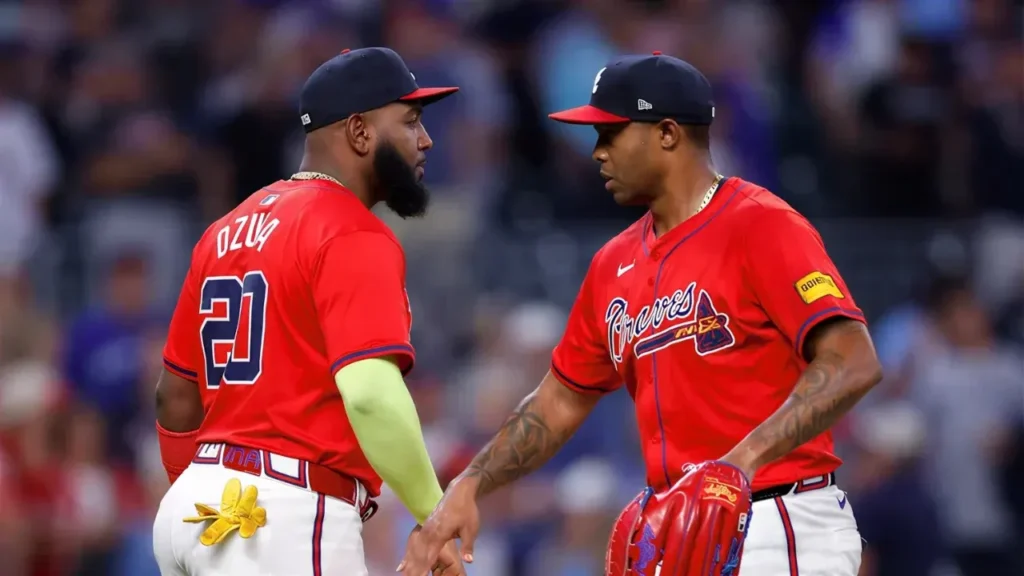
The Strategic Evolution of Roster Management: A Comprehensive Analysis of Marcell Ozuna and the Atlanta Braves Transactional Landscape (2020–2026)
The landscape of Major League Baseball roster construction has undergone a profound transformation since the implementation of the universal designated hitter in 2022. At the center of this evolution within the National League stands Marcell Ozuna, whose tenure with the Atlanta Braves from 2020 through 2025 serves as a definitive case study in the intersection of elite offensive production, aging curves, and the complexities of high-value veteran contracts. The trajectory of Ozuna’s career during this period illustrates the delicate balance front offices must maintain between honoring established veteran contributions and pursuing the flexibility required to sustain a championship-caliber roster in a modern economic environment. As the 2026 season approaches, the transition of Ozuna to the Pittsburgh Pirates and the Braves’ subsequent shift in organizational philosophy regarding the designated hitter position provide critical insights into the modern era of baseball operations and the shifting priorities of competitive franchises.
The Historical Genesis of the Atlanta Tenure
Marcell Ozuna arrived in Atlanta in 2020, signing a one-year deal that preceded a long-term four-year, $65 million extension in 2021. His impact was immediate and profound, particularly during the shortened 2020 season where he led the National League in home runs (18) and runs batted in (56) while posting a career-best 1.067 OPS. This performance solidified his role as the primary engine of the Braves’ middle order, a position he would hold with varying degrees of statistical variance for the next five years. However, to understand the “waiver candidate” discussions that would eventually dominate the 2025 news cycle, one must examine the volatility that characterized the middle years of his contract.
Between 2021 and 2022, Ozuna’s value was under constant scrutiny. In 2021, he appeared in only 48 games, posting a meager.213 batting average and a.645 OPS, which was significantly below league average for an primary outfielder. This period was complicated by off-field issues and legal troubles that raised questions about his future with the organization, as the Braves navigated the public relations and clubhouse impacts of his disciplinary actions. Despite these setbacks, the organization maintained its commitment to the player, a decision that appeared vindicated by his subsequent resurgence in 2023 and 2024.
Detailed Career Progression and Contractual Milestones
The following table outlines the fluctuations in Ozuna’s performance and financial standing during his tenure with the Braves, highlighting the peaks and valleys that informed the team’s long-term decision-making.
| Season | Team | Games | HR | RBI | AVG | OPS | Salary/Status |
| 2020 | ATL | 60 | 18 | 56 | .338 | 1.067 | $18M (1-year) |
| 2021 | ATL | 48 | 7 | 26 | .213 | .645 | $12M (Year 1 Ext) |
| 2022 | ATL | 124 | 23 | 56 | .226 | .687 | $16M (Year 2 Ext) |
| 2023 | ATL | 144 | 40 | 100 | .274 | .904 | $16M (Year 3 Ext) |
| 2024 | ATL | 162 | 39 | 104 | .302 | .924 | $16M (Year 4 Ext) |
| 2025 | ATL | 145 | 21 | 68 | .232 | .755 | $16M (Year 5 Ext) |
The 2023 and 2024 seasons represented a remarkable late-career resurgence. In 2023, Ozuna hit 40 home runs, a milestone that reaffirmed his status as one of the premier power hitters in the game and placed him 19th in the National League MVP voting. This momentum carried into 2024, which many analysts consider his absolute statistical zenith. During the 2024 campaign, Ozuna appeared in all 162 games—becoming one of only three players in history to do so exclusively as a designated hitter since the position’s inception in 1973.
The 2024 Performance Apex: A Statistical Analysis
The 2024 season established a high-water mark for Ozuna across nearly every meaningful offensive category. His ability to maintain elite production over a full 162-game schedule provided the Braves with a level of stability that allowed other stars, such as Ronald Acuña Jr. and Matt Olson, to anchor a historic offense. His 183 hits and 331 total bases were reflective of a hitter who had mastered the strike zone, finishing the year with a career-high.378 on-base percentage.
Statistical Profile of the 2024 Performance Peak
The depth of Ozuna’s 2024 campaign is best understood through his ranking among qualified Major League hitters, where he consistently placed in the top decile for power and run production.
| Category | 2024 Performance Metric | National League Rank |
| Batting Average | .302 | 7th |
| Home Runs | 39 | T-5th |
| RBI | 104 | T-10th |
| On-Base Percentage | .378 | 8th |
| Slugging Percentage | .546 | 8th |
| OPS | .924 | 9th |
| Total Bases | 331 | 7th |
| Hard-Hit Percentage | 53.5% | 6th |
This peak performance made the subsequent decline in 2025 all the more jarring for the Atlanta fan base and the organization’s scouting department. The delta between his 2024 All-Star campaign and his 2025 output became the primary driver for the waiver candidate speculation that dominated the mid-to-late 2025 season.
The 2025 Regression: Analyzing the Statistical Delta
The 2025 season saw a significant downturn in Ozuna’s contact quality and overall efficiency. While he remained a respectable power threat, the precipitous drop in his batting average and the increase in his strikeout rate suggested that age-related deterioration of bat speed was beginning to manifest. In 2025, his batting average fell 70 points to.232, and his home run total was nearly halved, dropping from 39 to 21. Despite starting the season strong—batting.300 with 5 home runs in April—his production stagnated as the summer progressed.
Underlying metrics further colored this decline. His isolated power (ISO) decreased from.220 in 2024 to.178 in 2025, and his OPS fell below the league average for designated hitters, finishing at.755 compared to the position average of.765. Furthermore, his plate discipline metrics trended in an unfavorable direction; his strikeout rate climbed to nearly 25%, while his walk rate dipped significantly from his 2024 highs.
Comparative Analysis of Performance Decay (2024 vs. 2025)
The transition from 2024 to 2025 represents one of the more significant year-over-year regressions for a middle-of-the-order hitter in recent Braves history. The following data highlights the areas where the regression was most acute.
| Statistic | 2024 (Peak) | 2025 (Regression) | Variance |
| Games Played | 162 | 145 | -17 |
| Batting Average | .302 | .232 | -.070 |
| Home Runs | 39 | 21 | -18 |
| RBI | 104 | 68 | -36 |
| OPS | .924 | .755 | -.169 |
| WAR | 4.8 (est.) | 1.2 | -3.6 |
| Strikeout Rate | 23.1% | 24.8% | +1.7% |
| Walk Rate | 10.8% | 7.3% | -3.5% |
This decline was not purely a matter of statistical variance. Reports indicated that Ozuna battled through a persistent hip injury for much of the 2025 season, an ailment that affected his ability to stay balanced through his swing. While he demonstrated durability by appearing in 145 games and recording clutch hits—such as walk-off RBIs against Philadelphia on April 10 and Cincinnati on May 6—the injury significantly hampered his ability to generate power from his lower half. This led to a flatter swing plane and a reduction in average exit velocity, which dropped from a career average of 90.1 mph to 89.2 mph.
The Anatomy of the Waiver Candidate Narrative
The emergence of Marcell Ozuna as a “waiver candidate” in late 2025 was a phenomenon driven by the intersection of his declining performance, his substantial contract, and the Braves’ precarious position in the postseason race. By August 2025, the Braves trailed the division leader by a significant margin and found themselves 12 games out of the wild card race, a stark contrast to their previous seasons of dominance. With the trade deadline having passed without the team finding a suitable partner to take on Ozuna’s expiring contract, the waiver wire became the only remaining mechanism for potential payroll relief and roster experimentation.
In Major League Baseball, the waiver system allows teams to “waive” a player, making them available to all other 29 clubs. If a player is claimed, the claiming team assumes the remainder of the player’s salary. For the Braves, placing Ozuna on waivers in August 2025 would have theoretically allowed them to shed approximately $5 million of the remaining $16 million owed on his contract for that season.
Media Speculation vs. Front Office Reality
Despite intense speculation from outlets like Bleacher Report and Newsweek, which labeled Ozuna a prime candidate for a cost-cutting move, the Braves’ front office, led by Alex Anthopoulos, never officially placed Ozuna on waivers during the 2025 season. Several factors contributed to this decision:
The Braves organization historically emphasizes contractual honor and relationship management with veterans. A mid-season waiver dump for a player who had been a cornerstone of the 2021 World Series run could have negatively impacted clubhouse culture and the team’s reputation among future free agents who value organizational loyalty. Given Ozuna’s $16 million salary and his.232 batting average, the probability of a contending team claiming him and assuming the full financial obligation was viewed as near zero by industry analysts. While Ozuna’s production had dipped, the Braves lacked immediate internal replacements in their depth chart that offered superior projected production for a team still attempting to put a “quality product” on the field for its fans. Despite his on-field struggles, Ozuna remained a respected veteran presence in the clubhouse, often seen mentoring younger hitters and maintaining a positive dugout environment during a difficult season.
The waiver narrative, therefore, served more as a reflection of the team’s overall frustration with a disappointing 2025 season and a media exploration of potential “what-if” scenarios rather than a concrete transactional plan executed by the front office.
The Mechanics of the MLB Waiver System and Service Time Constraints
Understanding why the Ozuna situation garnered so much attention requires a technical grasp of the MLB waiver protocols and the specific rights afforded to veteran players. The system is designed to facilitate player movement while providing a structured hierarchy for claims based on team performance, ensuring that struggling franchises have the first opportunity to acquire talent.
Types of Waivers and Claim Priority
When a player like Ozuna is discussed as a waiver candidate, it typically refers to “outright waivers.” Unlike the pre-2019 “revocable trade waivers,” current outright waivers are irrevocable. If a player is placed on outright waivers and claimed, the original team cannot pull them back; the player and their contract are transferred immediately to the claiming club, which must then place the player on its 40-man roster.
The priority for claims is determined by the reverse order of winning percentage across the league :
| Claim Rank | Criteria |
| Priority 1 | Worst record in the same league (National League) |
| Priority 2 | Remaining same-league teams in reverse order of standings |
| Priority 3 | Worst record in the opposite league (American League) |
| Priority 4 | Remaining opposite-league teams in reverse order of standings |
If multiple teams claim a player, the team with the highest priority—the weakest record—wins the claim. For a player with a large contract like Ozuna’s, this system often results in the player “clearing” waivers because low-revenue, struggling teams are unwilling or unable to assume the high salary, and contending teams with better records are lower on the priority list and may not want to risk their own payroll flexibility.
The 10 & 5 Rule and Veteran Rights
A significant constraint on waiving or trading veteran players is the “10 & 5 Rule.” Any player who has accrued 10 years of Major League service time and has spent the last five years with the same team possesses the right to veto any trade to another organization. As of January 2026, Marcell Ozuna had accrued 12.124 years of service time and had completed his fifth season with the Braves, effectively granting him significant control over his movement. While the 10 & 5 rule does not technically prevent a team from placing a player on outright waivers, the subsequent refusal of an assignment to the minor leagues (which veterans with more than five years of service can do) would force the team to either keep the player on the active roster or release them while still owing the full remaining salary.
Furthermore, players with more than five years of Major League service time can reject an outright assignment to the minors while retaining their salary, or they may elect free agency. This creates a “deadlock” for teams: they cannot easily move an underperforming veteran to the minor leagues to find their swing without the player’s consent, often leaving release or a trade (with the original team eating much of the salary) as the only viable paths forward.
Economic Pressures and the Luxury Tax Threshold
The financial dimension of the Ozuna situation was further complicated by the Braves’ proximity to the Competitive Balance Tax (CBT) threshold, commonly known as the luxury tax. For the 2025 season, every dollar of Ozuna’s $16 million salary counted toward the team’s CBT calculations, which are based on the average annual value of contracts. In an environment where the Braves are operating near the upper limit of their budgetary comfort zone, underperforming high-salary veterans represent a significant opportunity cost that prevents the acquisition of supplementary talent like bullpen depth or starting pitching.
If the Braves had successfully waived Ozuna and another team had claimed him, they would have removed his remaining salary from their CBT payroll entirely, providing immediate relief. However, because he was not claimed and remained on the roster through the end of his contract, the Braves remained responsible for the full $16 million. This financial reality heavily influenced the team’s 2026 planning. The expiration of Ozuna’s contract at the end of 2025 liberated a critical pool of capital, which the front office viewed as essential for reallocating toward other roster needs, such as addressing the holes at shortstop and second base where depth had become an issue.
Luxury Tax and Payroll Implications (2025-2026)
The following table contextualizes the financial relief achieved by the Braves following the expiration of Ozuna’s contract.
| Year | Ozuna Salary | CBT Impact | Roster Status | Financial Strategy |
| 2025 | $16M | $16M | Active | Sunk cost; limited mid-season flexibility |
| 2026 | $0 | $0 | Free Agent | Reallocation of $16M to pitching/depth |
The Braves’ front office strategy during this period reflected a “philosophical approach” that suggests a preference for absorbing the final year of a contract rather than triggering a disruptive waiver placement that offers no guaranteed financial relief unless a claim occurs. This patience allowed the team to maintain organizational stability while preparing for a significant pivot in the 2025-2026 offseason.
The Organizational Shift: A New DH Philosophy for 2026
With the conclusion of the 2025 season, Marcell Ozuna elected free agency on November 2, 2025. His departure marked the end of an era in Atlanta—one where the designated hitter spot was occupied by a single, full-time player who offered little to no defensive versatility. Following Ozuna’s underwhelming performance and the team’s overall struggle to find lineup flexibility during injury-plagued stretches, General Manager Alex Anthopoulos signaled a radical shift in philosophy for the 2026 season.
The Move Toward a DH Committee
The Braves’ front office has indicated a preference for leaving the DH spot “open” in 2026, opting for a committee approach rather than signing a direct replacement like Kyle Schwarber or Cody Bellinger. This strategy offers several tactical advantages that the team lacked during the Ozuna era. President of Baseball Operations Alex Anthopoulos stated that the team is “leaning” toward this open spot to maximize freedom in daily lineup construction.
The 2026 roster features two high-caliber catchers: the veteran Sean Murphy and the 2025 Rookie of the Year Drake Baldwin. A rotating DH allows the Braves to keep both bats in the lineup simultaneously—Murphy behind the plate and Baldwin at DH, or vice versa—maximizing the offensive output from a position that typically offers low offensive floor. Baldwin, a left-handed hitter with a “far superior bat” to many backup options, provides a necessary balance to a right-handed heavy lineup. The 2023 National League MVP, Ronald Acuña Jr., has dealt with two serious knee injuries in his career. Taking him out of the field every few days will reduce the wear and tear on his joints while keeping his elite lead-off bat in the lineup. Similarly, “Iron Man” Matt Olson can benefit from getting off his feet without sacrificing his home run threat. A flexible DH spot allows the manager to play matchups more effectively, inserting left-handed or right-handed hitters based on the opposing pitcher’s splits. New manager Walt Weiss noted that while an “impact bat” who fits a full-time role is always welcome, the current preference is for the freedom provided by a committee.
Projected 2026 DH Rotation and Roster Impact
The transition away from Ozuna allows the Braves to utilize their roster in a way that was previously impossible.
| Player | Primary Position | Role in DH Rotation | Projected Impact |
| Ronald Acuña Jr. | Outfield | Periodic rest for knee maintenance | Longevity; preservation of elite speed/power |
| Drake Baldwin | Catcher | Primary left-handed DH option | Integration of rookie star; offensive optimization |
| Sean Murphy | Catcher | Right-handed DH option | Veteran presence; defensive rotation |
| Matt Olson | First Base | Rare rest days | Continuity; injury prevention |
| Jurickson Profar | Outfield/Inf | Versatile utility option | Tactical flexibility; matchup-based entry |
This committee approach represents a “modern” roster construction theory that prioritizes depth and flexibility over the traditional “anchor” DH. Unless a player produces at an elite level—approaching an OPS of.900 or higher—the consensus among progressive front offices is that a dedicated, non-defensive DH “holds the roster hostage” and limits the manager’s ability to react to in-game injuries or late-inning tactical needs.
The Pittsburgh Pirates Acquisition: A Strategic Pivot for Ozuna
On February 16, 2026, Marcell Ozuna signed a one-year, $12 million contract with the Pittsburgh Pirates, which includes a mutual option for the 2027 season. For Ozuna, the move to Pittsburgh represents a classic “bounce-back” opportunity in a lower-pressure environment, far from the intense scrutiny of the Atlanta spotlight where his 2025 decline was a constant talking point. For the Pirates, the signing is a calculated risk aimed at injecting veteran power into a youthful lineup that has struggled with run production and consistency.
Why the Pirates Pursued Ozuna
The Pirates’ decision to sign a 35-year-old designated hitter coming off a down year was driven by several organizational needs that aligned with Ozuna’s remaining strengths.
The Pirates’ roster is among the youngest in the National League, featuring several high-ceiling prospects who are still adjusting to major league pitching. Ozuna’s experience as a three-time All-Star, Gold Glove winner, and two-time Silver Slugger provides a mentorship figure for the clubhouse. The Pirates’ lineup has historically skewed toward contact-oriented hitters. Ozuna’s ability to “mash” against left-handed pitching remains a viable skill, even as his overall numbers have declined. Right-handed power always draws interest from clubs needing a threat in the middle of the order. A one-year deal at $12 million is a manageable expenditure for a team like Pittsburgh. If Ozuna recaptures his 2024 form, he becomes a valuable trade chip at the 2026 deadline that could net the team more prospects; if he continues to struggle, the financial commitment is not long-term and does not hinder their future rebuild plans.
2026 Spring Training and Early Indications
Early data from the 2026 Spring Training suggests that the change of scenery and the recovery from his 2025 hip injury may be yielding positive results for the veteran. Through mid-March 2026, Ozuna has demonstrated improved contact quality in Grapefruit League play.
| Statistic | 2026 Spring Training (Pirates) | 2025 Regular Season (Braves) | Variance/Note |
| Batting Average | .316 | .232 | Significant contact improvement |
| OPS | .802 | .755 | Trending toward league-average DH |
| At-Bats (Sample) | 19 | 487 | Early spring indicators |
| Home Runs | 0 | 21 | Focus on gap-to-gap contact |
While the sample size is small, the.316 average and.802 OPS indicate that Ozuna’s bat speed may have stabilized following his recovery from the hip issues that hampered his swing in 2025. His ability to draw walks—a trait that remained respectable even during his 2025 slump—continues to provide a high floor for his on-base percentage.
The Impact of Ballpark Factors: Truist Park vs. PNC Park
A critical, often overlooked element in the transition of Marcell Ozuna from Atlanta to Pittsburgh is the difference in ballpark geometry and its effect on right-handed power hitters. Truist Park (Atlanta) is ranked in the top 10 for home run park factors, particularly favoring right-handed pull hitters who can take advantage of the relatively short porch in left field.
In contrast, PNC Park (Pittsburgh) is traditionally viewed as a pitcher-friendly environment. The stadium features a deep left-field “North Shore Notch” that can turn potential home runs into long flyouts, which has historically frustrated power hitters who do not possess elite, all-fields strength. Ozuna’s success in Pittsburgh will depend heavily on his ability to maintain his hard-hit rate and generate sufficient backspin to clear the high walls in right-center field. If his hip injury in 2025 permanently reduced his ability to “drive” the ball to the opposite field, the transition to PNC Park could exacerbate his statistical decline, making him a candidate for a bench role later in the season.
The 2026 MLB Landscape: Broader Trends in Roster Construction
The Marcell Ozuna situation is emblematic of a larger trend across Major League Baseball as teams approach the 2026 season. The “generational shift” is characterized by a move away from expensive, aging veterans toward versatile, high-upside youth who can contribute in multiple facets of the game.
The Rise of the Versatile Athlete and Prospect Integration
Teams are increasingly prioritizing players who can influence the game through speed, defensive range, and situational hitting—rather than relying on “one-trick” power hitters who occupy the DH spot. Rising stars like Jackson Holliday, Junior Caminero, and Jackson Chourio represent this new prototype of player who can play multiple positions while offering elite offensive upside.
This shift makes it increasingly difficult for aging designated hitters like Ozuna to find high-value, multi-year contracts. Front offices now analyze performance under pressure and evaluate prospects who demonstrate readiness during Spring Training to secure Opening Day positions, often choosing the cheaper, more versatile rookie over the expensive veteran.
Short-Term, High-AAV Contracts and Financial Engineering
Another emerging trend is the use of short-term, high-Annual Average Value (AAV) contracts for veterans who still possess elite skills but come with age or injury risk. The Dodgers’ acquisition of Kyle Tucker on a short-term, high-AAV deal illustrates this “all-in” approach for elite talent while maintaining long-term flexibility. For second-tier veterans like Ozuna, this translates to one-year “prove-it” deals, such as his $12 million contract with Pittsburgh, as teams look to maintain financial flexibility for future offseasons while filling immediate holes in the lineup.
The Competitive Balance Tax as a Roster Ceiling
As more teams approach the CBT thresholds, the management of “dead money” or underperforming contracts becomes a primary concern for General Managers. The Braves’ decision to let Ozuna walk rather than offering a qualifying offer or a short-term extension was a direct result of their need to “reset” their payroll to avoid the escalating penalties associated with being a repeat luxury tax offender. This trend is seen across the league, with even high-spending teams like the Yankees and Mets making tactical pivots when pursued free agents demand contracts that would push them into higher tax brackets.
Analytical Forecast: Ozuna’s Future and the Braves’ New Era
The long-term outlook for Marcell Ozuna is a classic “high-risk, high-reward” scenario for both the player and his new club. If he performs well in Pittsburgh in 2026, the mutual option for 2027 becomes a viable pathway for him to finish his career with a competitive franchise or serve as a mentor during a playoff run. However, the underlying data from his 2025 season remains a warning sign. Aging power hitters who experience a 70-point drop in batting average rarely return to their peak form, and the physical toll of 13 seasons in the majors often manifests as recurring soft-tissue injuries.
For the Atlanta Braves, the departure of Ozuna and the move to a DH committee will be evaluated based on the health and production of their internal options. If the committee approach successfully preserves Ronald Acuña Jr.’s knees and allows Drake Baldwin to blossom into a middle-of-the-order threat, the “waiver candidate” discussions of 2025 will be remembered as the catalyst for a more efficient, modern, and defensively sound Braves roster.
Synthesis of Roster Management and Veteran Value
The saga of Marcell Ozuna from 2020 to 2026 highlights the volatile nature of professional baseball at the highest level. The transition from a 162-game ironman and MVP candidate in 2024 to a rumored waiver candidate and underperformer in 2025 serves as a stark reminder of how quickly the “aging curve” can impact a player’s market value and organizational standing.
The modern MLB front office must prioritize flexibility over tradition. The Braves’ move away from a full-time DH in 2026 suggests that the traditional model of a stationary power hitter is becoming obsolete in favor of roster versatility that can withstand the rigors of a 162-game season. Health remains the ultimate performance multiplier; the impact of Ozuna’s hip injury in 2025 underscores how even a slight reduction in lower-half mobility can lead to a catastrophic decline in offensive output. Finally, the speculation surrounding Ozuna as a waiver candidate was fundamentally a financial narrative, driven by the team’s desire to manage luxury tax obligations and create roster spots for younger talent like Drake Baldwin, who represent the future of the franchise.
As the 2026 season unfolds, the performance of Marcell Ozuna in Pittsburgh and the success of the Braves’ innovative DH committee will provide the final verdict on one of the most discussed roster transitions of the decade. The data indicates that while the “Big Bear” may still have productive innings left in his career, the era of the high-priced, full-time, non-defensive DH in Atlanta is firmly in the past, replaced by a more dynamic and economically sustainable model of team construction.